What to Pour With What You Spoon: A Soup-and-Tea Pairing Guide
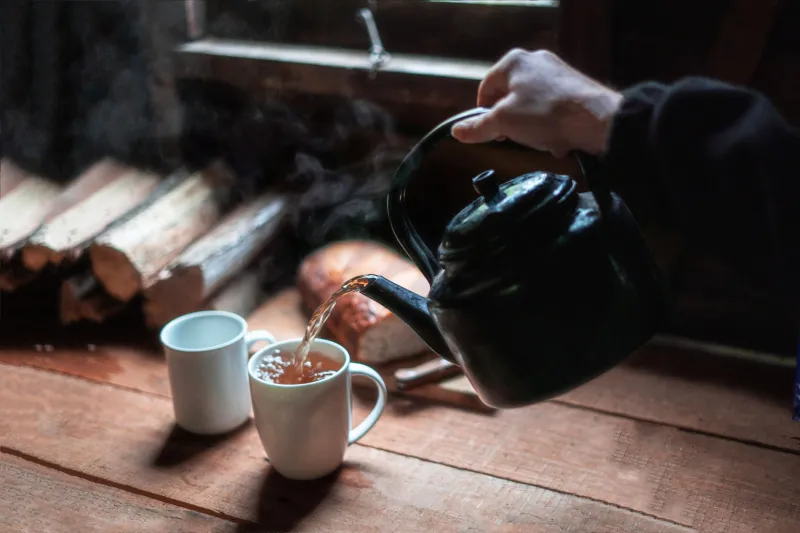
Soup counters and tea houses belong on the same block. One ladles, one steeps, and both are in the business of warm liquid and a place to sit. Pairing the two is less about memorizing rules than about weight, tannin, and temperature — and the small habit of ordering a pot instead of a cup, so the table has something to pass.
Start With Three Questions, Not a Rulebook
Before you match a bowl to a pot, ask three things.
How heavy is the soup? A clear chicken broth and a cream-based chowder do not want the same tea. Light bowls want light teas that will not bully them. Thick, rich bowls want a pot with enough body to stand alongside the spoon.
How much tannin can the bowl handle? Tannin is the drying, grippy feeling in tea. It is a useful tool against fat and salt, but it can turn metallic next to tomato or overwhelm delicate herbs. Think of tannin as seasoning: a little sharpens, a lot distracts.
How hot is the bowl, and how spicy? A scalding pot beside a spicy pho can make the whole table feel like a contest. Warm tea, not lava, is usually the kinder move. Let the first cup cool for a minute while the soup settles.
Six Bowls, Six Pots
Here is a short menu card to keep in your head. None of it is law; all of it is a starting point.
| Soup | Pot to order | Why it works |
|---|---|---|
| Chicken noodle | Genmaicha or a light Keemun | Toasted rice notes feel cozy; light black tea has structure without astringency. |
| Tomato | Hojicha or a smooth black with milk | Roasted, low-tannin tea sidesteps the acid; a splash of milk softens the edges. |
| Lentil | Assam or a roasted oolong | Malt and roast stand up to earthy, dense legumes. |
| Chowder | Irish breakfast or Assam with milk | Tannin cuts the cream; milk keeps it from turning harsh. |
| Pho | Jasmine green or a light oolong | Floral, gentle teas let star anise, basil, and lime do their work. |
| Miso | Genmaicha or hojicha | Nutty, roasted flavors meet salty umami without fighting it. |
A few notes behind the table. Chicken noodle is mild and salty, so a smoky tea will taste like it is shouting. Tomato is acidic enough that a highly tannic green can go sharp; roasted tea is the safer companion. Lentil soup is the rare bowl that can take a strong black tea, especially if you have added a squeeze of lemon or a spoon of yogurt. Chowder is rich enough that you want a tea with a little grip, but not so much that it feels like a second course of tannin.
Pho is the one to watch on heat. The broth is aromatic rather than heavy, and a light oolong or jasmine green keeps the table calm. If you like chili oil, order the tea warm and drink it between spoons, not after every bite. Miso soup is a small bowl with a big salty streak; genmaicha's toasted rice is a natural match, and hojicha brings a soft roasted sweetness that does not compete.
Ordering at a US Teahouse or Soup Counter
Most American teahouses sell tea by the pot, which is exactly what you want. Ask whether the pot is meant for one person or can be shared, and request an extra cup. At a soup counter, the tea list is often shorter — a few blacks, a green, maybe an herbal — but the same logic applies. If the shop only has cups, ask for a pot of hot water on the side so you can stretch the leaves.
Sequence matters more than people think. If the table is small, order the soup first and the pot after the bowls are cleared, or ask for the tea to come alongside but with a saucer to park the leaves. Do not let a delicate green sit in hot water for twenty minutes while you eat; it will turn bitter and you will blame the tea instead of the timing.
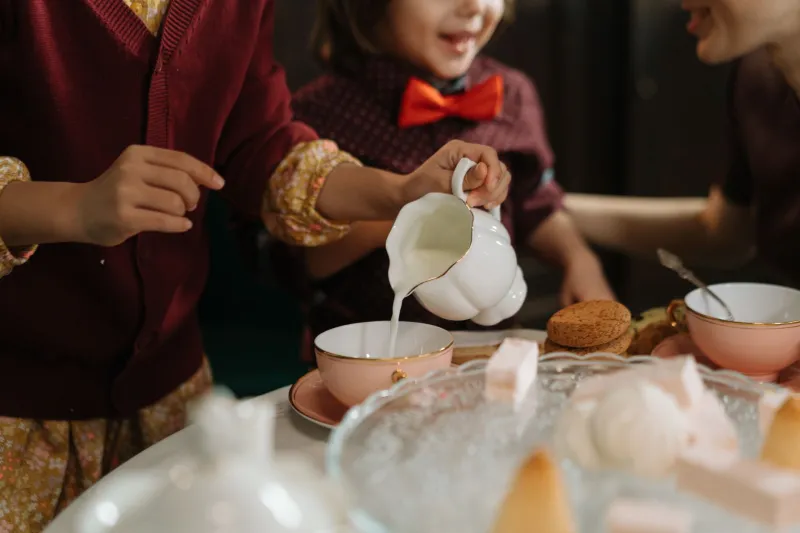
And do not be shy about milk. In the US, a lot of teahouses will offer it, and with chowder or a strong breakfast tea, a splash is not a crime. It is hospitality.
The Second Steep Is the Whole Point
The pot between courses is what turns a quick bowl into a shared table. The second steep is often the better one — softer, sweeter, less edgy — but only if you keep it warm and do not let the leaves stew.
A few practical moves: preheat the pot with hot water before you add leaves. Decant the first steep into a second pot or a thermos if you plan to linger. Use a tea cozy, a candle warmer, or a small thermos on the table. At home, a narrow pot holds heat better than a wide one, and a second small pot for the next steep keeps the ritual going without a kettle run.
If you are hosting, set the pot on a trivet in the middle of the table and let people pour for each other. That small act — passing the pot, topping up a neighbor's cup — is the tea-house habit that makes a soup supper feel less like a quick stop and more like a table worth staying at.
A Closing Note on the Spoon
You do not need a perfect pairing to have a good lunch. You need a bowl that is hot, a pot that is not, and enough time to notice the difference. Start with body, adjust for tannin, keep the heat kind, and order the pot. The soup will do the rest.