The Kettle Stays On: Hosting a Potluck That Feels Like a Tea House
There is a kind of dinner party that photographs beautifully and feels awful to attend: the host has been cooking since noon, the kitchen looks like a small disaster zone, and by the time the food hits the table the person who made it is too wrung out to eat any of it.
The tea house runs on a different logic. Nobody expects the person behind the counter to also produce seven courses. The house supplies a hot pot, a place to sit, and a reason to stay a while. The rest arrives with the guests. That is essentially the entire brief for a tea-house potluck, and it is the most sustainable way I know to feed ten people without quietly resenting them by 8 p.m.
The Host Only Has Two Jobs
Tea and a base. That's it. Everything else is negotiable.
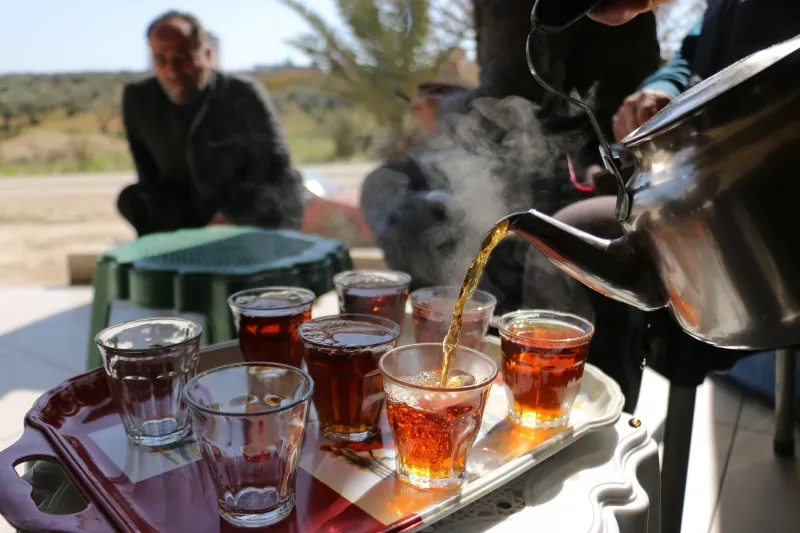
Tea means a pot that stays warm and gets refilled without ceremony. Two is plenty: one black or roasted (English breakfast, hojicha, a plain oolong) and one herbal for the people who stop drinking caffeine after seven. A thermos of hot water next to the pot solves the top-up problem so you are not jumping up every eight minutes.
The base dish should be something that holds happily at low heat and gets better, not worse, as it sits. A big pot of brothy beans. A pot of rice with a lid on it. A gingery chicken-and-rice soup. Congee, if your crowd is game. The point is not to impress anyone; the point is that there is always something warm on the table even if three guests show up with nothing but a bag of chips.
That's the entire host burden. Notice what is not on the list: appetizers, a cheese board, dessert, a signature cocktail, matching anything.
Assign Categories, Not Recipes
Micromanaging a potluck is the fastest way to ruin one. If you hand out a recipe, you have given someone homework, and you have also guaranteed that a nervous cook will text you twice to ask whether the shallots should be minced or sliced.
Instead, assign a category and let people solve it however they like.
- Something green (a salad, a pile of blistered green beans, a bowl of cucumbers with vinegar)
- Something starchy (bread, potatoes, noodles, rice cakes)
- Something to dip or scoop (hummus, a jar of pickles, warm flatbread, a wedge of soft cheese)
- Something sweet (cookies from the good bakery count; so do sliced oranges)
Ask about allergies and serious dislikes once, in the group text, and then let it go. If someone brings the same seven-layer dip they always bring, that is not a failure of the plan. That dip is now part of the tradition.
One more thing: tell people the time the table will be full, not the time the party starts. A 6:30 arrival for a 7:00 table gives the early birds something to do with their hands, namely hold a cup of tea.
Set a Table That Asks People to Stay
Tea-house tables are rarely precious. They are usually a little worn, a little crowded, and very easy to sit at. You are going for that.
Keep the centerpiece low enough to see over. Put the teapot where two people can reach it, or on a side table within arm's length of the end seats. Stack plates at one end and let the line form however it forms. Mismatched mugs are better than matching ones, because a guest holding a chipped blue mug tends to relax faster than a guest holding your wedding china.
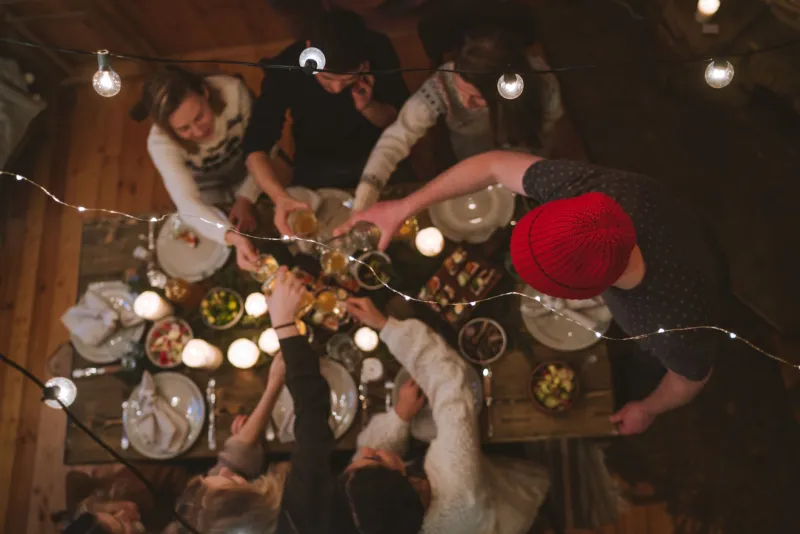
Light matters more than linens. Lamps, candles, one overhead light off. If your table seats six and eleven are coming, do not apologize for the folding chairs and the coffee table annex. A slightly improvised seating chart is part of the charm; assigned seats are not.
Let the Kettle Do the Pacing
The pot is a clock, and a gentler one than the clock on the wall.
Pour tea the moment people walk in, before coats are off. It gives shy arrivals a job. Let everyone stand and mill for the first twenty or thirty minutes with cups in hand; the sitting-down happens on its own once the food is out. Around the time plates are cleared, refill the pot instead of announcing dessert. Fresh tea signals a new act without anyone having to bang a glass.
If the evening starts to drag, brew something different. A switch from black to mint is enough of a change to make people look up and start a new conversation.
Prompts That Don't Feel Like Icebreakers
Shared-table culture is built on the idea that strangers can have a real conversation if someone gives them a nudge that isn't embarrassing. Keep it light and specific, and never force anyone to answer.
A few that reliably work at a mixed table:
- What is the first dish you remember being proud of making?
- What did your family drink with dinner when you were a kid?
- What is the one thing in your kitchen you would replace first if it broke?
- Who taught you how to make the thing you brought tonight?
Write one on an index card and tuck it under a plate or two. Whoever finds it can read it out and answer, or pass. Passing is always allowed.
The Ending Is Part of the Hospitality
Do not over-offer leftovers three times. Offer once, pack them, done. Send the last slice of cake home with whoever has the longest drive. Hand people a to-go cup of tea for the road if you have cups to spare; it is a small thing that people remember longer than the meal.
And when the last guest leaves, your kitchen should look like a kitchen, not a war crime. Soak the pot, stack the plates, go to bed. The kettle will be there in the morning.