Pass the Pot, Not the Perfection: Hosting Friendsgiving in 2026 the Tea-House Way
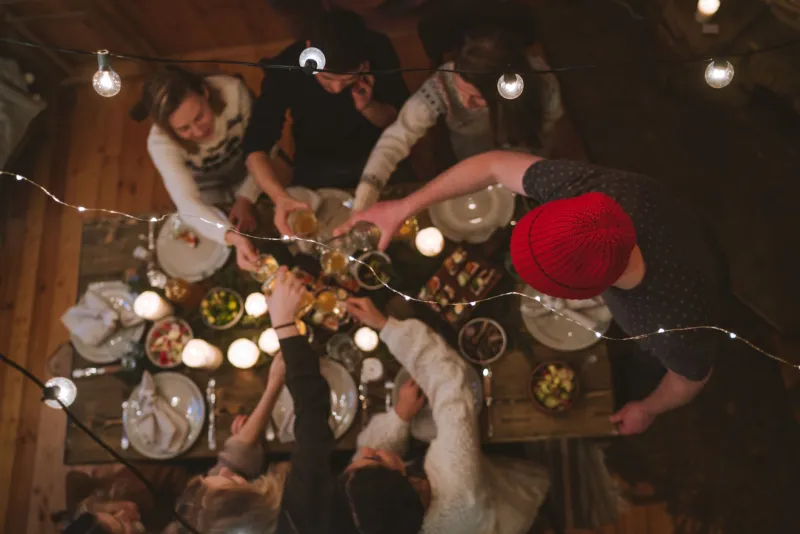
Friendsgiving has a reputation problem. Somewhere between the mood-board table setting and the shared spreadsheet of dietary restrictions, a fairly simple idea — eat with the people you chose — turned into a production with a run time.
I'd like to propose a different model, and it comes from the tea house: a pot in the middle, a handful of small dishes, and no particular moment when the meal is officially declared open. Nobody carves anything. Nobody gives a toast unless they want to. The food arrives in waves and the tea keeps getting topped up, and the whole thing runs on the energy of people leaning in rather than a host performing.
Why a Tea Table Fits Friendsgiving Better Than a Formal One
The Thanksgiving plate is a monument: turkey, stuffing, four sides, all stacked and steaming and structurally unsound. It's delicious and it's also a lot of work to assemble and a lot of pressure to get right.
A tea table flips that. Dishes are small, they come out when they're ready, and the point is that hands keep reaching. Roasted oolong cuts through butter. A spiced black tea resets your palate between bites. And because the pot is the thing in the center of the table, the host's job is mostly to pour — which is a much nicer job than plating.
The other advantage is size. Tea-house hospitality assumes people will arrive at different times and leave at different times. That's exactly how a Friendsgiving with a group chat full of work schedules actually goes.
The Menu: Make-Ahead, Pass-Friendly, Tea-Companionable
Build the menu around things that hold well and taste fine at room temperature. If it needs to be fried at the last second, it's a party trick, not a side dish.
- Something to nibble while people arrive. Marinated olives, salted nuts, a wedge of sharp cheddar, sliced apples, a loaf of bread torn into pieces. Put it out and walk away.
- One big roasted vegetable. Delicata or butternut squash with brown butter and sage, roasted the day before and reheated. Squash is forgiving and cheap in November.
- A mash people can serve themselves. Mashed sweet potatoes with a little miso and butter, in a wide bowl with a spoon.
- A grain salad that doesn't wilt. Farro or wild rice with dried cranberries, toasted pecans, chopped parsley, and a mustardy vinaigrette. Better on day two.
- Greens with backbone. Braised kale or collards with garlic, made in a big pot and left on the stove. Someone will eat the leftovers for breakfast.
- Something for the non-meat eaters that isn't an afterthought. A mushroom-and-lentil hand pie, or a sheet-pan of crispy chickpeas and cauliflower with yogurt.
- Dessert from a store, served on a real plate. This is the single greatest time-saver available to you. A good bakery pie, warmed slightly, with whipped cream you actually whipped.
If your group is a potluck crowd, assign categories rather than dishes — one person on bread and cheese, one on a vegetable, one on dessert, one on drinks. Nobody ends up with four kinds of dip.
Three Pots, No Ceremony
You do not need a gaiwan, a scale, or a thermometer. You need a kettle and something to pour from.
Roasted oolong is the workhorse. It's toasty and generous, it stands up to roasted vegetables, and it forgives a long steep better than most teas. Brew it strong in a big pot and decant it into a thermos so it stays hot through the evening.
Spiced black tea is the crowd-pleaser. Simmer black tea with cinnamon sticks, a few cardamom pods, sliced ginger, and a strip of orange peel, then keep it warm on the lowest flame. Add milk and a little honey at the table, not in the pot, so people can choose.
A caffeine-free option matters more than hosts expect. Roasted barley tea or hojicha means the person who has to drive home at ten can still hold a warm cup, which is half the reason anyone comes.
Tea is also, quietly, the cheapest thing on the table. A whole evening of good oolong costs less than one bottle of wine.
A Timeline That Leaves Room to Sit Down
Five days out: send the invite with the start time and an end time. Give people a window, not a summons. Ask about allergies in the same message, not in a follow-up interrogation.
Two days out: shop. Roast the squash. Cook the grains. Make the vinaigrette in a jar. Toast the nuts.
The day before: braise the greens. Set out whatever serving dishes you own, plus a roll of masking tape and a marker for labeling. Wash the glasses you borrowed.
Morning of: clear the table completely and put everything that lives on it into a laundry basket. You'll sort it Sunday.
An hour before: put out the nibbles. Start the spiced tea. Pull chairs from the bedroom, the neighbor's apartment, the curb.
When the first person arrives: sit down with them. This is the entire strategy. A host who is still chopping when guests arrive teaches the room to wait for permission to have a good time.
Making a Rented Apartment Feel Like a Tea Room
The trick is not decoration. It's light and surfaces.
Turn off the overhead light. Completely. Use lamps, a candle or three, and whatever warm bulbs you have. Overhead lighting is what makes a small apartment read as a small apartment.
Push two folding tables together and cover the seam with a cloth — a flat sheet works if you iron it, and honestly even if you don't. One long surface changes how a room feels more than any centerpiece.
Mix the seating on purpose: kitchen chairs, a bench, a folding chair, a floor cushion for the person who genuinely prefers it. Mismatched chairs tell guests that no one is being graded.
Put coats on the bed, not on the back of a chair. Clear a spot near the door for shoes. Keep music low enough that people don't have to shout, because a room where people shout never settles.
And skip assigned seating. The whole point of a shared table is that the seating keeps rearranging itself over the course of the night.
Conversation That Doesn't Feel Like a Workshop
Don't run icebreakers. Do leave a small stack of question cards near the teapot for anyone who wants them — the good kind, like "what's a food your family always fought over?" or "what's the best thing you've eaten standing up?" They work because they're optional and because they're about the table.
The real engine of conversation at a tea table is the passing. "Try this." "Wait, what's in this?" "Here, take the last one." You don't need to facilitate anything. You need enough small dishes that hands stay busy.
Also: let silence happen. A table that can be quiet for thirty seconds is a table where people are comfortable. Fill every gap and you'll wear everyone out by nine.
The Budget Part
A Friendsgiving for eight, done this way, is genuinely cheap. Vegetables and grains carry the meal. Tea is pennies a cup. Borrowing serving dishes costs nothing but a text message. The two places worth spending are the bread and the dessert, because those are the things people remember and the things that are hard to fake.
And if money is tight this year, say so in the invite: "Bring something to share, or bring nothing and come anyway." The second clause is the one that makes it a real invitation.
Hospitality Over Performance
The best version of this holiday isn't the one that photographs well. It's the one where the last two people are still at the table at eleven, cups gone cold, arguing about whether the sweet potatoes needed more salt.
Set the pot down. Sit. Pass the plates. That's the whole method.