Pull Up a Chair: An Argument for Sitting With Strangers
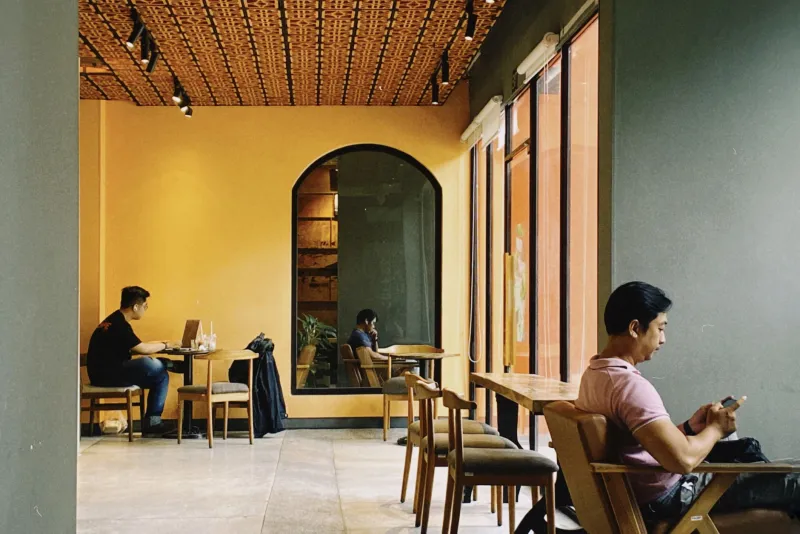
There's a particular kind of American restaurant seat I'd like to defend: the long wooden table by the window where you sit down next to someone you have never met, order a bowl of something, and spend forty minutes in pleasant, unforced proximity.
It's an unglamorous thing to be passionate about. But I'll say it plainly: communal tables are one of the last cheap, low-stakes, no-commitment ways for adults in this country to end up in the company of people they didn't choose. That's worth arguing for.
The Numbers Are Bleak and Everyone Knows It
The U.S. Surgeon General's 2023 advisory on loneliness and isolation made an argument that a lot of people had already intuited: a large share of American adults report significant loneliness, and the health effects are not metaphorical. Since then, the reporting has kept piling up, and so has the cultural response — friendship apps, club revival, "third place" discourse.
Most of that response asks people to opt in to something structured: a run club, a book group, a dinner series with a sign-up link. Those are good. They also require a level of initiative that many people simply do not have on a Tuesday.
The shared table asks almost nothing. You already wanted lunch. The seat is already there. The stranger is already sitting in it.
What Tea Houses Knew First
This isn't a new idea, and it isn't a Scandinavian import. It's the older arrangement.
Tea houses across Asia — and the working cafes and diners and lunch counters of the American past — were built around the assumption that seating is a common resource. You take a seat, you share a pot, you nod at the person across from you, and then you go about your business. Incidental company, not forced friendship. The bench was long because the room was for everyone.
Somewhere along the way, American dining split into two options: a private booth, or an event. The middle ground — a table where you sit beside a stranger and nothing in particular is required to happen — got squeezed out.
That middle ground is the thing worth rebuilding.
What a Shared Table Actually Asks of You
Communal seating fails when people treat it as a free-for-all and it fails when people treat it as a library. There's a middle etiquette, and it's learnable.
Ask before you sit. Not a formal request — a glance, an eyebrow, "mind if I take this one?" Almost nobody says no, and the asking itself sets a tone.
Read the table before you read the person. Laptops out with headphones on means heads-down. A book with a coffee means available-if-interested. Two people already deep in conversation are not a threesome waiting to happen.
One question, then wait. "What's good here?" is the entire opening move. If it lands, you'll get a conversation. If it doesn't, you've lost nothing and neither have they.
Don't hold court. The person who treats a shared table as an audience is the reason some people avoid them. Match the volume and the length of what's coming back at you.
Give an exit. If you're the one who started talking, be the one who says "well, I'll let you eat" when the food arrives. That sentence is a gift.
Leave the table as you found it. Push the chair in. Take your trash. If you borrowed the hot sauce, return the hot sauce.
For Hosts and Owners: Design Does Most of the Work
A communal table that feels like a penalty is usually a design failure, not a customer failure.
Keep the table narrow. Somewhere around thirty inches wide. Beyond that, you're shouting across a runway and nobody bothers.
Give every seat a defined edge. A setting, a water glass, a menu card, a hook underneath. Ambiguity about where the seat ends is what makes people defensive.
Mix chair types along one table if you can. A long bench on one side does more for conviviality than any signage, because it removes the sense that each seat is a private bunker.
Don't reserve the whole table for groups after six. This is the most common way a shared table dies: it becomes a party table, and the solo diner learns not to try.
Put the good light and the outlets at the communal table. If the shared table is the leftover furniture in the drafty corner, people will read that accurately.
Train staff to seat singles there — and to ask first. A host who says "would you mind sharing? the counter's full" gets a yes. A host who silently drops a stranger into someone's lunch gets a review.
How to Tell a Welcoming Table From an Awkward One
A few reliable signals, from the chair-side view:
- Space is legible. You can see where to put your bag and your elbows without guessing.
- Nobody is performing. If the table's loudest person is being tolerated rather than enjoyed, keep walking.
- People are eating, not just occupying. A table full of laptops with untouched food is an office.
- Someone makes eye contact for exactly a second. That's the universal sign for "the seat's fine."
- The room is warm enough to take your coat off. Cold rooms kill lingering, and lingering is the whole point.
The Neighborhood Argument
Here's the part I care about most. A communal table is a small piece of neighborhood infrastructure. It's how a person who moved to a city eighteen months ago ends up knowing the name of one barista and one regular and one person who also orders the same thing every Thursday.
Those are not deep friendships. They don't need to be. They're the thin, useful web of recognition that makes a place feel like yours — and in a country where a staggering number of people report feeling invisible, thin threads matter more than we usually admit.
We've spent a decade building apps to manufacture what a long table does for free.
Try It This Week
So here's the assignment. Next time you're choosing a seat in a cafe or a casual restaurant, take the one next to somebody. Say one sentence. See what happens. If nothing happens, you've lost a minute of your life and gained a slightly better story about a stranger's opinions on soup.
And if you run a place with a long table, don't hide it in the back. Put the kettle on it. That's what it's for.