Pour It High, Pass It Slow: Five Tea Rituals Worth Borrowing for Dinner
Wine gets the ceremony at American dinner parties. There's the label reading, the decanting debate, the little ritual of the first pour. It's fine. It's just that tea has been quietly doing the same job, with more warmth and fewer hangovers, in roughly every culture that has ever sat down to eat.
The case here is not that you should turn your next dinner into a cultural performance. It's that a single borrowed ritual — one, chosen well, credited honestly — can change the temperature of an evening more than any centerpiece. Here are five worth stealing.
1. Moroccan Mint Tea: The Pour Is the Point
In Morocco, tea is gunpowder green leaf, a fistful of fresh spearmint, and sugar, served in small glasses and poured from a height so the tea aerates and a fine foam gathers on top. The pour is the show, and it's also functional. More than one glass is impolite to refuse; the saying goes that the third glass is the sweetest.
The mood it creates: theatrical hospitality. It says, out loud, that you are glad these particular people are in your house.
How to borrow it: steep gunpowder green tea with a big handful of mint and sugar to taste — start sweeter than feels right to you. Then pour from as high as you safely can into small glasses or juice tumblers. Do it once, at the table, after the plates are cleared. Do not do it over a rug you love.
2. Japanese Senchado: The Case for a Slower First Cup
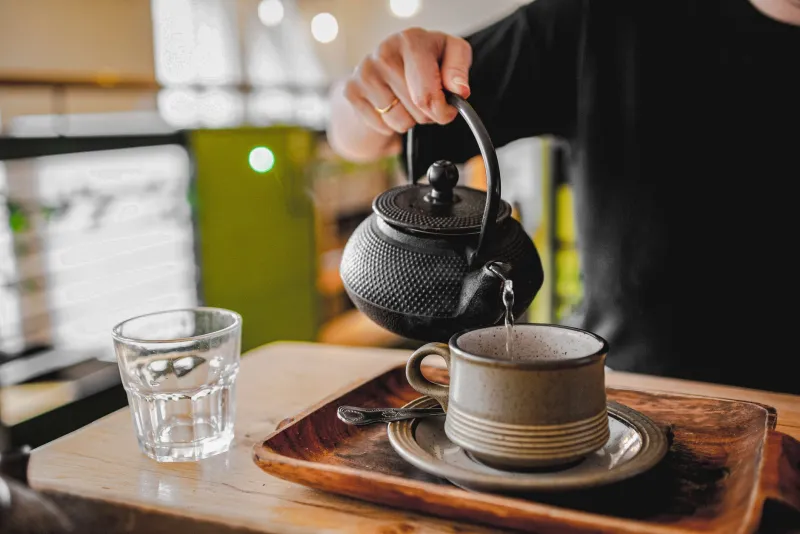
Senchado is the practice of steeping loose sencha, and it is a quieter study than the matcha ceremony most people picture. The water is cooled well below boiling — around 160 to 170°F — and the same leaves are steeped three or four times, each round a little different. Small cups, short pours, everyone served in turn.
The mood it creates: attention. Not solemnity; just a gentle insistence that you notice what you're drinking.
How to borrow it: boil a kettle, then let it sit four or five minutes while you finish clearing the table. Steep your leaves for about a minute, pour a little into each cup, going back around so everyone gets a share of the last, strongest drops. Two infusions is enough for a dinner party. Serve it in whatever small cups you own — espresso cups work fine.
3. Indian Masala Chai: Simmer, Don't Steep
The biggest mistake Americans make with chai is treating it like tea. In most Indian homes, chai is boiled — water, black tea, ginger, cardamom, cloves, then milk, all simmered together and strained. It's not a delicate infusion; it's a small act of cooking, often made several times a day.
The mood it creates: bustle and comfort at the same time. Chai is what you get handed while somebody is still doing three other things.
How to borrow it: make a big batch as the arrival drink. Simmer water with sliced ginger, crushed cardamom pods, and a couple of cloves for five minutes, add black tea and let it go another minute, then pour in whole milk and bring it back to a bare simmer. Strain into mugs. Keeping the pot on the stove means the kitchen stays the warmest room in the house, which is exactly where you want people at 6:45.
4. Turkish Çay: The Refill That Never Ends
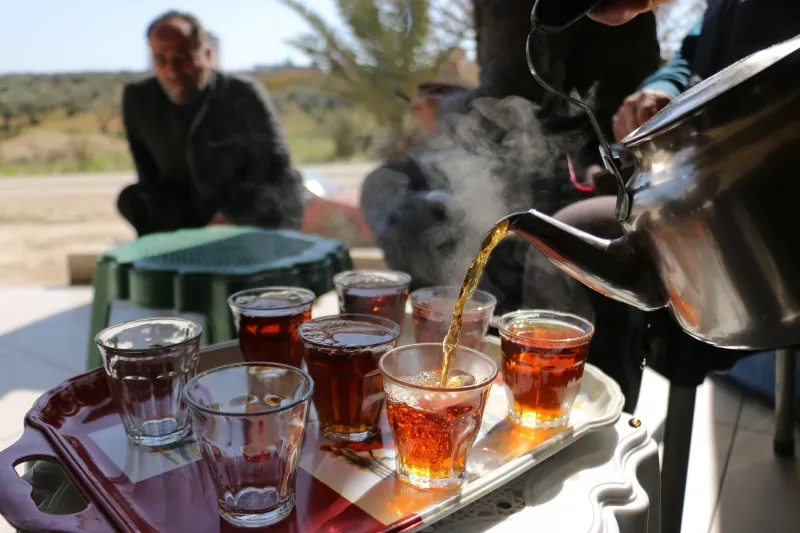
Turkish tea arrives in a tulip-shaped glass, dark and strong, with hot water on the side and sugar cubes on a saucer. The two-pot setup — a small pot of concentrate stacked over a larger pot of hot water — means every person dilutes to their own taste and nobody's glass sits empty for long.
The mood it creates: lingering. Nothing about a tulip glass suggests you should finish it and move on.
How to borrow it: no çaydanlık required. Brew a strong concentrate in a small saucepan, keep it warm in a thermos, and put a kettle of plain hot water beside it. Give people small glasses or espresso cups and let them top up their own. This is the single best tea format for a long, grazing dinner, because refills are self-serve and your glass stays warm the whole night.
5. Russian Samovar Tea: The Standing Invitation
The samovar — the big urn that kept water at a boil for hours — was less a teapot than a piece of furniture, and its whole purpose was the promise that tea would be available for as long as anyone wanted to sit. A small pot of strong zavarka concentrate sat on top; you mixed it with hot water from the tap and stirred in jam or lemon.
The mood it creates: an open-ended evening. The tea is not a course; it's a standing invitation.
How to borrow it: fill a thermos with boiling water and park it at the end of the table with a small pot of very strong tea. Add a jar of jam and a spoon. Tell guests what to do and then stop managing it. Somebody will be drinking tea at 11 p.m. when the conversation has gotten good.
Borrow, Don't Cosplay
Two rules make this work. First, pick one ritual per dinner. Five tea ceremonies in a single evening is not hospitality, it's a theme park. Second, say where the thing comes from. A sentence — this is how mint tea is poured in Morocco — costs nothing and turns a cute touch into something closer to respect.
Past that, the equipment list is short: a saucepan, a strainer, a thermos, a kettle, and whatever small cups are already in your cabinet. The rest is just the willingness to sit a little longer than you planned.