Build a Board, Pour Some Tea: A Cold-Weather Guide to Gathering Around the Kettle
A winter tea board is not a smaller dinner. It is a different kind of invitation: come sit, warm your hands, stay a while. Instead of timing courses and clearing plates, you set out a few pots, a board of seasonal bites, and enough mugs for everyone. The table does the rest.
That approach fits the tea-house spirit well. A shared table works best when nobody is performing host perfection. In 2026, with schedules already full, a tea board is a generous way to gather without turning the evening into a production.
Why a Tea Board Works When Dinner Feels Like Too Much
A full meal asks guests to commit to a long sit, a fixed start time, and a lot of food. A tea board asks less and gives more room. People can arrive with a bottle of wine, a loaf of bread, or nothing at all. They can eat standing up, settle into a chair, or drift back for a second cup. The board stays inviting for hours because it is built to be nibbled, not served.
Tea also changes the pace. Coffee tends to signal a task, a morning rush, a laptop session. A pot of tea signals a pause. The first cup is hot; the second is slower. By the third, someone is usually telling a longer story.
Start With Three Teas, Not Thirty
You do not need a tea wall to host well. Three well-chosen teas cover most winter gatherings: one black, one oolong, and one herbal. Add hot water and a clean pot, and you have a menu.
For black tea, look for an Assam, Ceylon, or English breakfast blend. These are easy to find in US grocery stores and forgiving to brew. Use water just off the boil and steep three to five minutes. For oolong, a ti kuan yin or a roasted oolong offers a toasty, gently floral cup that feels special without demanding expertise. Use water around 195 to 205 degrees and steep three to four minutes. For herbal tea, choose peppermint, chamomile, rooibos, or a ginger blend. These are caffeine-free, which matters if you are hosting into the evening. Pour boiling water and steep five to seven minutes.
Label the pots. A small card with the tea name and steeping time saves you from answering the same question all night. Offer a small pitcher of milk and a bowl of honey or sugar, but do not overcomplicate it. Good tea can stand on its own.
Build the Board in Zones
A tea board works best when it has contrast: sweet and savory, soft and crunchy, fresh and rich. Think in zones rather than recipes.
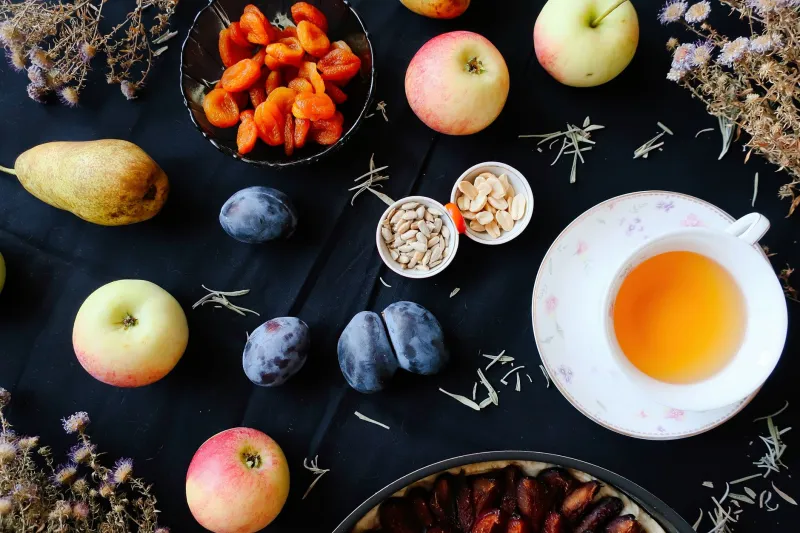
For the fresh zone, use sliced apples and pears, clementines, and maybe persimmon if you can find it. Dried fruit belongs here too: apricots, figs, cranberries, and dates all pair well with tea. For the crunchy zone, set out toasted nuts, seeded crackers, and a small dish of candied ginger. For the rich zone, add a soft cheese, a wedge of aged cheddar, honey, and a little jam. For the baked zone, keep it simple: shortbread, ginger molasses cookies, mini scones, or oat bars.
Make-ahead bites are your friends. Spiced nuts can be made two days ahead and kept in a jar. Shortbread freezes well. Tea sandwiches can be assembled a few hours before guests arrive. A small pot of apple butter or quince preserve makes crackers feel intentional. If you want something warm, set out a loaf of bread and a toaster or a small dish of roasted squash with flaky salt.
A Make-Ahead Timeline That Keeps You Out of the Kitchen
Two days before, bake anything that keeps: shortbread, ginger cookies, oat bars. Toast and spice the nuts. Day before, shop for fresh fruit and cheese, wash the mugs, and set out your serving pieces. The morning of, slice fruit and cheese, make tea sandwiches if you are using them, and fill a carafe with hot water. Right before guests arrive, brew the first pot and warm the bread.
Do not try to brew every pot at once. Brew one tea to start, then switch as the evening moves along. A thermal carafe of hot water lets guests top off their own cups without waiting for you. If you have a large group, brew in two smaller pots rather than one giant one; the tea stays fresher and the refills feel more frequent.
Set the Table for Staying
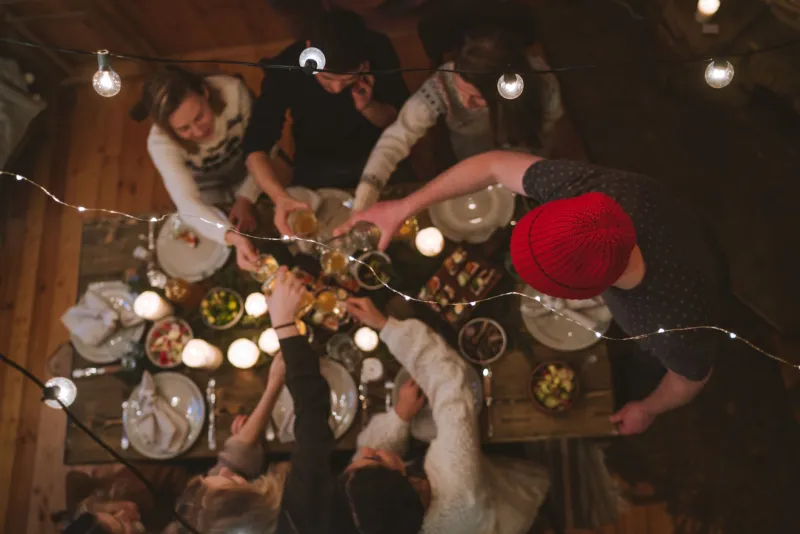
A tea board is only half the hospitality. The room matters too. Pull chairs close together. Use lamps instead of overhead lights. Put the tea station at one end of the table so people have a reason to get up and move around. Keep a stack of small plates and a bowl for used spoons.
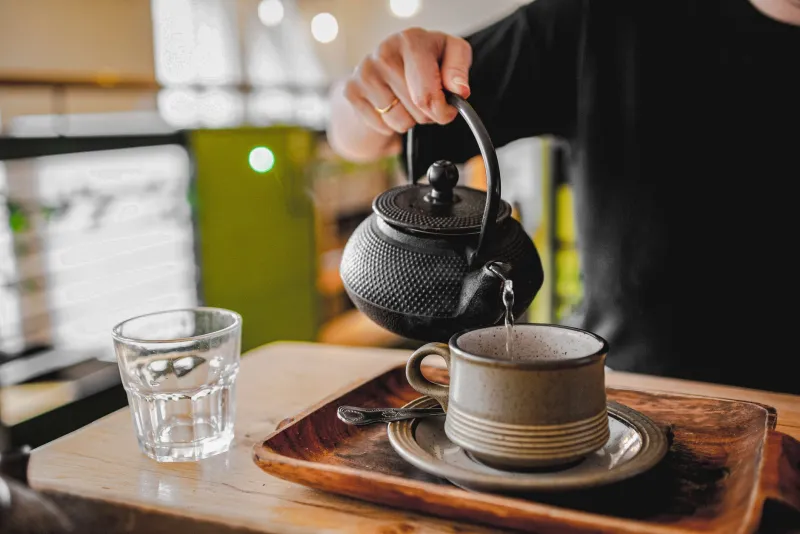
Make the first pour a small ritual. Pour the first cup for a guest, hand it over, and say what it is. That tiny gesture tells people they are not at a counter; they are at a table. It also gives everyone something to do while the conversation finds its shape.
A Simple Winter Tea Board Menu for 2026
- Black tea: Assam or English breakfast, with milk and honey
- Oolong: roasted oolong, served plain
- Herbal: peppermint or rooibos chai, caffeine-free
- Fresh: apple and pear slices, clementines, dried figs
- Savory: aged cheddar, seeded crackers, tea sandwiches
- Sweet: ginger molasses cookies, shortbread, candied ginger
- Warm: toasted bread with apple butter or quince preserve
The point is not to impress anyone with a tea list. The point is to give people a reason to sit down and a reason to stay. A winter tea board does both. It turns a cold-weather gathering into something softer: a shared table, a warm cup, and no hurry to clear the plates.