The Break Room Chair Nobody Booked: A Case for the Office Tea Pause
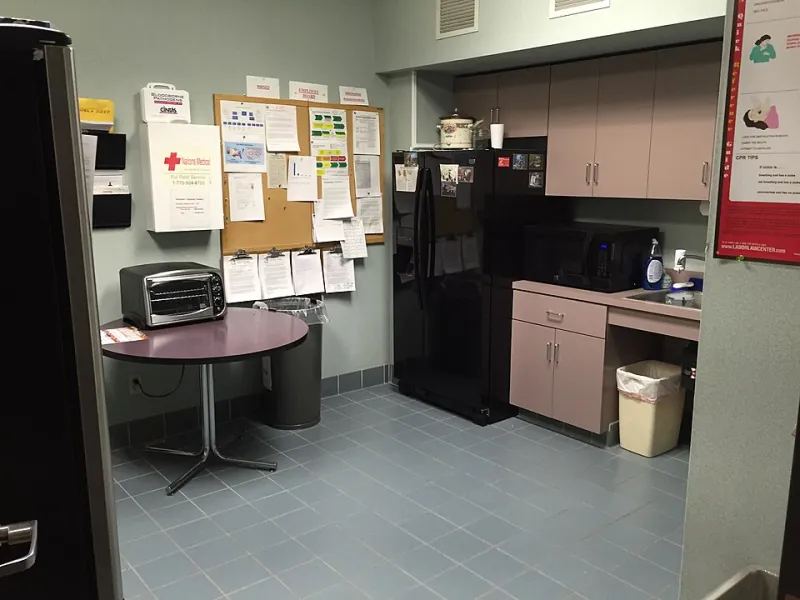
Photo: Famartin, CC BY-SA 4.0, via Wikimedia Commons
The office kitchen in most American workplaces is a strange little room. It has a kettle, a microwave, a refrigerator full of labeled leftovers, and a coffee machine that sounds like it is clearing its throat. What it often lacks is a chair worth sitting in. People pass through, fill a mug, and leave. The break is real, but the table is not.
That is a missed opportunity, and not in the buzzy, poster-on-the-wall sense. A short tea pause—fifteen minutes, maybe twenty—can do something a staff meeting cannot. It lets people be in the same room without an agenda. It gives new hires a place to land. It turns the office kitchen from a pit stop into a shared table.
The Kettle Is Not the Problem
Plenty of offices already own the equipment. There is a kettle, or there is a hot-water tap, or there is a coffee maker someone cleans on Fridays. The problem is that the setup invites a drive-by. You make your drink, you nod at whoever is rinsing a container, and you go back to your desk. The kettle is doing its job. The room is not.
A shared tea table does not require a renovation or a budget line. It requires a place to set things down and a reason to stay for one more cup. In practice, that means a tray. A tray is a small piece of infrastructure with outsized social power: it says this is not a pile of stray mugs, this is a spot. Put it at the end of the counter, not in the middle of the traffic path. Add two pots—one for black tea, one for herbal—and a stack of sturdy cups that do not require a hunt for matching saucers.
Set the Table Before You Set a Time
The first temptation is to schedule a meeting about the tea break. Resist it. A tea table works best when it feels like it was always there. Start with the physical setup, then add the invitation.
A simple office tea tray might include:
- A small kettle or thermal carafe of hot water
- Two pots: one black tea, one herbal or decaf
- A short stack of ceramic or heavy glass cups
- A small dish for used tea bags
- Sugar, honey, or lemon if your office already has them
- A handwritten card that says when the pot goes on
That last item matters more than it sounds. A card on the tray—Today, 3:15 to 3:30—is a standing invitation without a calendar notification. It does not require an RSVP. It does not make anyone feel monitored. It simply says: there will be a table here, and you are welcome at it.
The Fifteen-Minute Frame
Fifteen minutes is enough. That is the whole argument. A half-hour tea break can start to feel like an event, and events require energy. Fifteen minutes feels like a pause. It fits between the 3 p.m. slump and the last push before the end of the day. It is long enough for two cups and short enough that no one has to explain where they were.
Pick a time and keep it steady for a few weeks. Tuesday and Thursday afternoons are a good start, especially in offices where Monday is a slog and Friday is a ghost town. Put the pots on at 3:10. Leave them out until 3:35. Do not hover. Do not send a reminder to the whole company. Let the card do the work.
The agenda-free part is not laziness. It is the point. When coworkers only talk in meetings, they learn each other's meeting voice—the efficient one, the agreeable one, the one who says we should circle back. A tea table lets the other voices show up. Someone mentions a leaky faucet at home. Someone else asks what a good beginner tea is. A new hire admits they have not found the good lunch spot yet. None of this is a team-building exercise. It is just people in chairs.
What Happens After the Second Pour
The second pour is where the magic usually happens, and it is not magic at all. The first cup is a transition. People are still half in their inbox. By the second cup, the room settles. Someone sits down. Someone else pulls over a chair that was not technically part of the setup. That is the chair the office was missing.
In 2026, plenty of teams are still working in hybrid patterns, which makes the shared table more valuable, not less. The days people are in the office are packed with scheduled conversation. A tea pause gives the unscheduled kind a chance. It also gives remote coworkers a natural anchor when they are on-site: a low-stakes place to be known.
Managers do not need to bless it, but they should not fill it. The moment a tea break becomes a standing update, people will find somewhere else to be. Keep the pot separate from the project. Let the conversation go where it goes. If it lands on work, fine. If it lands on the best bagel place near the office, also fine.
Keep It Alive Without Making It a Project
A tea table dies when it becomes another thing to manage. The trick is to keep it small enough that maintenance is almost invisible. One person restocks tea. Another rinses the pots. Someone wipes the tray at the end of the week. That is the whole system.
If you want to rotate hosts, do it quietly. A short note on the card—This week's pot: Earl Grey—is enough. Do not build a spreadsheet unless your office genuinely loves spreadsheets. Do not buy a hundred cups. Do not turn the tea break into a wellness initiative. The point is not to optimize the pause. The point is to have one.
And if the first few afternoons are quiet? Good. A table does not need a crowd to be a table. Two people and a warm pot is a start. The chair beside you is doing more work than it looks like.
The Chair Is the Point
The office kettle already exists. The missing piece is the chair—the physical one you pull up, and the social one you offer. A tray, two pots, a few sturdy cups, and a standing fifteen-minute invitation are not a program. They are a small form of hospitality, practiced at work.
So put the pot on. Leave the card out. Sit down for a minute, even if no one joins you. In a workday built around calendars, that quiet little table might be the most useful room in the building.