The Stool Beside You: A Diner Tea Field Guide for Home Hosts
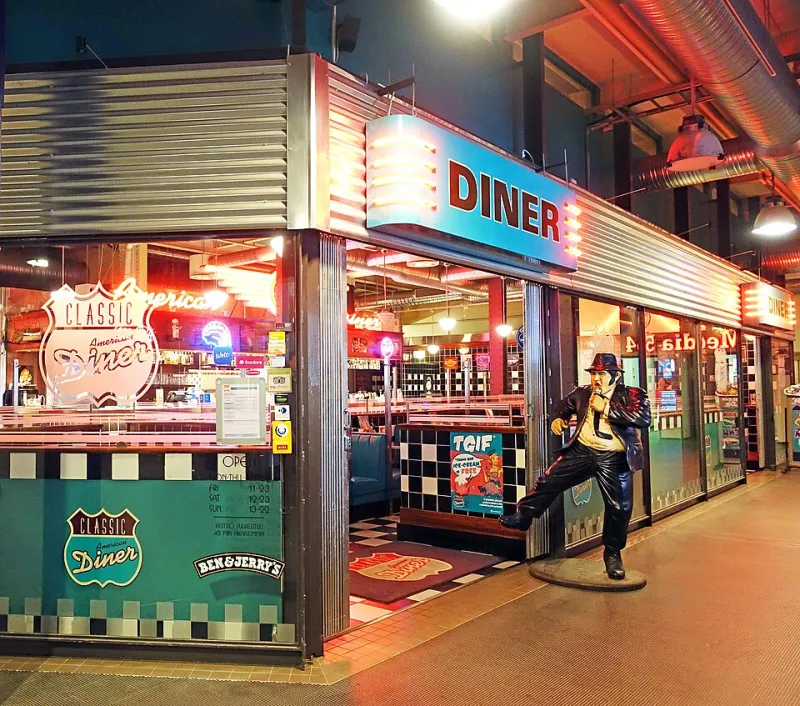
Photo: Tiia Monto, CC BY-SA 3.0, via Wikimedia Commons
Walk into a diner at 7:40 on a Tuesday morning and ask for hot tea. You will not get a ceremony. You will get a thick mug, a tea bag still in its paper sleeve, and a small pot of water that is hot but not quite angry. That is the whole production. And yet the counter seat around it may be the most reliable shared table in America.
The Order That Looks Like Nothing
Hot tea is not the diner's showpiece. Coffee is. Coffee gets the bottomless refill, the shorthand, the server who flips a mug upright before you finish sitting down. Tea gets a question: 'You want lemon?' It gets a bag on a string and a saucer for the spent bag. That low expectation is exactly why the ritual works. You are not ordering an experience. You are ordering a reason to stay a little longer.
At a table, tea can feel like a private pause. At the counter, it becomes public in a gentle way. The person beside you has a plate of eggs and a problem with the bus schedule. The person two stools down is reading a paperback. The counter does not force a conversation. It simply leaves the seat open.
A Mug Is a Small Invitation
Diner tea arrives in a mug built for hands, not for tasting flights. It is thick-walled, usually white, sometimes stamped with a logo that has faded. The tea itself is often ordinary: a black blend, maybe English breakfast, maybe something orange pekoe from a big food-service box. The water may be dispensed from an urn that has been holding at a simmer since before sunrise. None of this is precious. All of it is generous.
The mug does a kind of hosting work. It gives you something to hold while you decide whether to talk. It gives the server a reason to circle back. It gives the stranger next to you an opening: 'Is that tea?' Which is not really a question about tea. It is a question about whether the two of you are going to be alone together or not.
The First Pour Is Rarely the Best Pour
Here is the practical truth about diner tea: the first pour is often lukewarm. The water has traveled from an urn, through a pot, to your cup, and the bag has not had time to wake up. If you pour and sip immediately, you may get a cup that tastes like a warm memory of tea. The fix is simple. Let the bag sit. Put the saucer over the mug if the diner is drafty. Ask for a fresh pot of water if it has gone flat. Then wait a minute, which is exactly the amount of time a counter encourages you to waste.
This is not a flaw in the ritual. It is the ritual. Tea at a diner teaches you that hospitality is not always about peak flavor. Sometimes it is about a warm cup that buys you ten minutes at a counter, next to people you did not arrive with.
Regional Tea, Same Counter
Diner tea changes with the map. In the Northeast, you may get a small stainless pot and a saucer, and the server may treat hot tea as a perfectly normal order, even if coffee is still the house religion. In the South, hot tea can be the odd one out; sweet iced tea is the default, and a request for hot tea may produce a bag of black tea and a mug of very hot water. In the Midwest, you are likely to see a mug and a little basket of tea bags, which is its own kind of welcome. On the West Coast, a diner might offer green tea or mint alongside the black blend, depending on the kitchen.
The constants are more interesting than the differences: a sturdy mug, a bag on the side, a small delay, and a seat that puts you near other people. The counter does not care whether the tea is fancy. It cares whether you have a place to put your hands.
What to Order With a Plain Cup
Plain diner tea is best with food that does not compete. Buttered rye toast. A plate of scrambled eggs and hash browns. A grilled cheese with the crust pressed thin. A slice of pie that has been under a glass dome since yesterday. If the diner has soup, order a cup of chicken noodle and let the tea cool beside it.
For pie, a black tea is fine, but a mint or chamomile bag, if it is available, makes the slice feel less like dessert and more like a pause. For eggs and toast, stay with black tea and ask for milk on the side. For soup, a plain black tea with lemon is the diner equivalent of a clean napkin. None of this requires a pairing chart. It requires noticing what is already on the counter.
What the Counter Teaches a Host
The counter is a master class in low-stakes hosting. It does not greet you at the door. It does not hand you a menu with a story on it. It gives you a seat and a mug, and then it gets out of the way. At home, that translates to a few useful habits.
First, keep the tea station low and reachable. A kettle, a small pitcher of milk, a bowl of bags, and a stack of mugs do more than a tray of garnishes. Second, offer a choice without turning it into a quiz. 'Black, mint, or something herbal?' is enough. Third, do not rush the first pour. Let people sit with a warm cup before you ask them to pass a plate. Fourth, leave one seat that is not assigned. The counter works because there is always a stool that could be pulled up.
A Low-Stakes Tea Counter at Home
You do not need a diner stool to borrow the model. Set a small tea station at the end of the kitchen counter, near the outlet, away from the sink. Put out two kinds of tea, not eight. Keep a saucer for spent bags. If a neighbor stops by, pour water first and ask questions second. If a friend lingers after dinner, refill the kettle instead of clearing the table.
The diner counter is not a tea house. It is louder, stickier, and more likely to smell like bacon. But it shares the same basic idea: a shared surface, a warm cup, and no requirement to be impressive. That is a ritual hiding in plain sight, one mug at a time. And it is worth bringing home.