The Pot That Waits: A Practical Guide to Staggered Dinner Arrivals
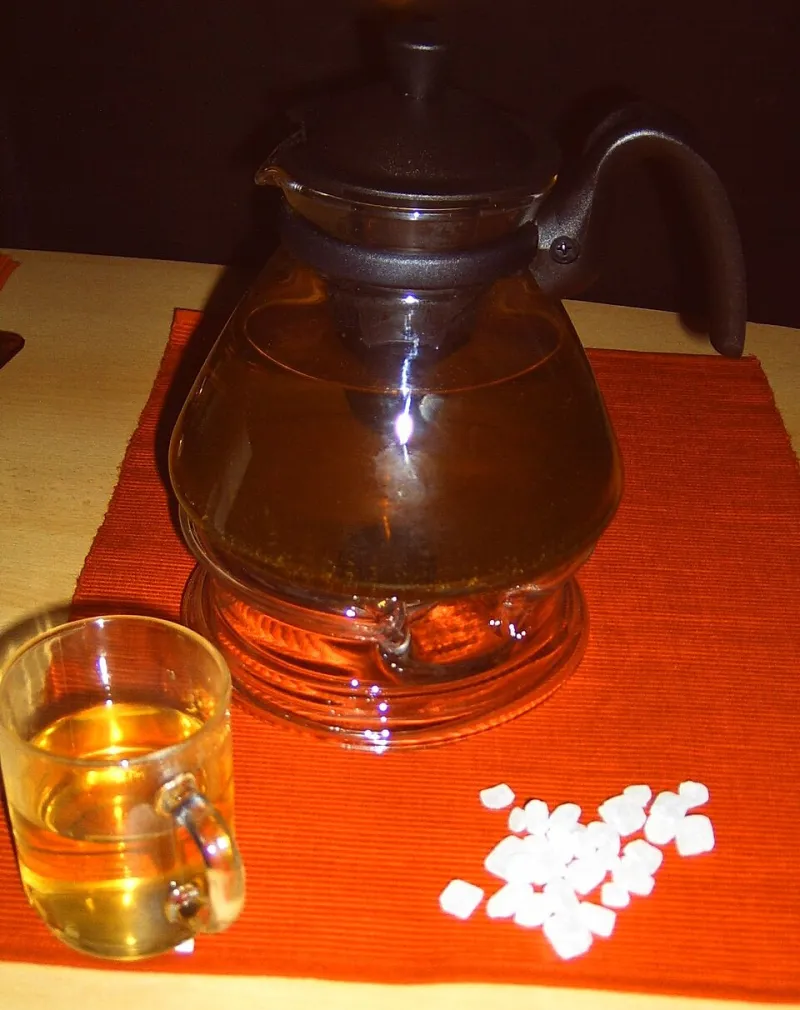
Photo: Nadine Schlonies, CC BY-SA 2.5, via Wikimedia Commons
The first time I hosted a dinner where guests arrived across ninety minutes, I did what a lot of hosts do: I treated lateness like a small emergency. I turned the oven up, rebuilt the salad, and greeted every new person with the wired smile of someone who had been holding their breath since six. By the time the last friend walked in, the food had given up and so had I.
It took a few more dinners—and a few long afternoons in tea houses—to understand that the problem wasn't the latecomer. It was the assumption that a shared meal has one true start time. Tea-house hospitality runs on a different clock. The water stays hot, the cups stay out, and whoever walks through the door is treated as expected rather than accommodated.
Here's how to borrow that approach without turning your kitchen into a waiting room.
Put a Second Pot on Before Anyone Arrives
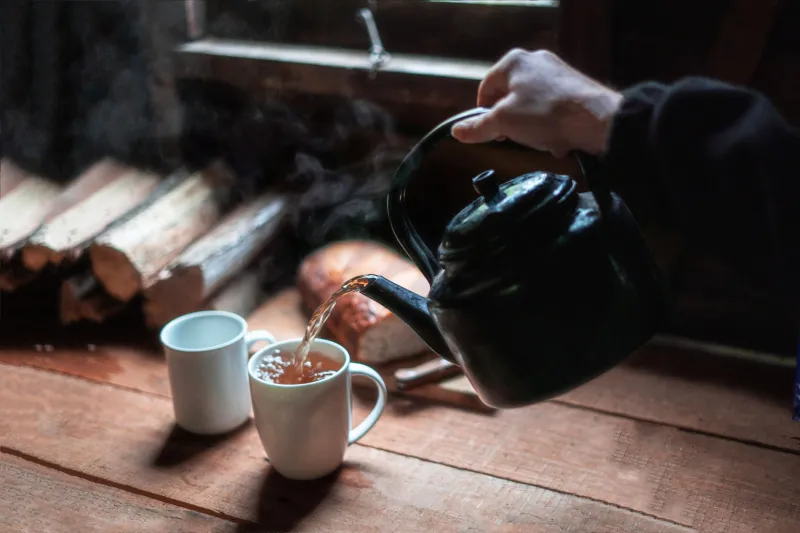
The name Aiseki Chaya translates roughly to "shared-table tea house," and the second kettle is one of the oldest tools in that room. It isn't a backup plan; it's part of the setup. Before the first guest rings the bell, fill a small pot with something that can sit on low heat for an hour without suffering: a light broth, a pot of genmaicha, spiced cider, or a simple dal. Keep a thermos of hot water beside it.
The point is not to feed the latecomer a separate dinner. It's to make the table feel continuous. When someone arrives at 7:50 for a 7:00 dinner, you don't have to restart the evening. You pour, you sit, and the room absorbs them.
Cook for Holding, Not for Timing
The most useful hosting shift I've made is choosing dishes that improve—or at least don't degrade—while they wait. A pot of braised short ribs, a tray of baked beans, a rice cooker set to keep warm, a squash soup that thickens on the stove: these are patient foods. So are tea eggs, marinated cucumbers, good bread, and a jar of pickles. None of them require a countdown.
What doesn't hold well? Fried things, delicate greens, anything that needs to be served the second it leaves the pan. Save those for the arrival moment if you love them, or skip them on nights when the guest list is a moving target. A cold-weather table in the US has plenty of forgiving options—chili, cornbread, roasted roots, a pot of chickpeas with olive oil and lemon.
One small ritual helps: plate a portion for the latecomer before the table starts eating. Cover it, set it aside, and serve it warm when they arrive. They get the first round, not the leftovers. It's a five-second gesture that says the meal was built with them in mind.
Leave the Place Set
A latecomer can feel the shape of the gap before they even sit down. If the table has been cleared around an empty chair, they walk into a small apology. If their place is still set—napkin, cup, chair pulled slightly out—they walk into a welcome.
I keep a candle at the empty setting and light it when the first guests arrive. It sounds sentimental, and it is. It also works. The chair stops being a hole in the table and becomes a held space. When the latecomer finally sits, the candle is already burning, the cup is already there, and nobody has to make a production of resetting anything.
Skip the Interrogation
The instinct when someone arrives late is to ask what happened. Even kindly, it can land as a status report. "Traffic?" "The train?" "Work?" The latecomer ends up narrating their own delay while everyone else watches.
Tea-house conversation tends to move sideways instead. Ask something that opens the room rather than audits the schedule: "What was the best small thing that happened to you today?" or "What's the last thing that made you laugh?" Keep a question or two in your back pocket for exactly this moment. It gives the arrival a soft landing and spares everyone the awkward recap.
If the person wants to explain, they will. If they don't, the table has already moved on to something better.
Know When to Stop Waiting
Hospitality has a spine. A second kettle is not an invitation for the evening to become hostage to an unknown ETA. Set a quiet window—thirty minutes past the start time, maybe forty-five—and then serve. Plate the latecomer's portion, cover it, and let the table eat. When they arrive, they join a meal in progress, which is exactly what a shared table is supposed to be.
This isn't punishment. It's the difference between keeping a light on and standing in the doorway. The table stays warm either way.
The Pot That Waits
What I like about the second kettle is that it doesn't ask anything of the person it's waiting for. It just stays hot. No sigh, no reheated plate, no story about how long everything has been sitting. By the time the latecomer sits down, the tea is fresh, the food is warm, and the conversation has already found its rhythm.
That's the whole trick, really. You don't need a perfect start time. You need a table that can hold a few different ones.