Order a Slice, Stay for the Pot: The Case for America's Pie Counters
There is a particular kind of American table that doesn't announce itself. It has no reservation list, no host stand, no candle in a jelly jar. It's a stretch of laminate, maybe twelve stools deep, with a pie case glowing behind it like a small glass cathedral. You sit down next to a stranger, order a slice, and something quietly loosens in the room.
The pie counter is not trendy. It is not trying to be. And that is precisely the argument for it: in a dining landscape that keeps optimizing for speed or spectacle, the counter remains one of the few places where a quick stop can turn into an hour you didn't plan on. At Aiseki Chaya, we spend a lot of time thinking about shared tables and the stories that steep around them. The pie counter belongs in that conversation.
The stool is the invitation
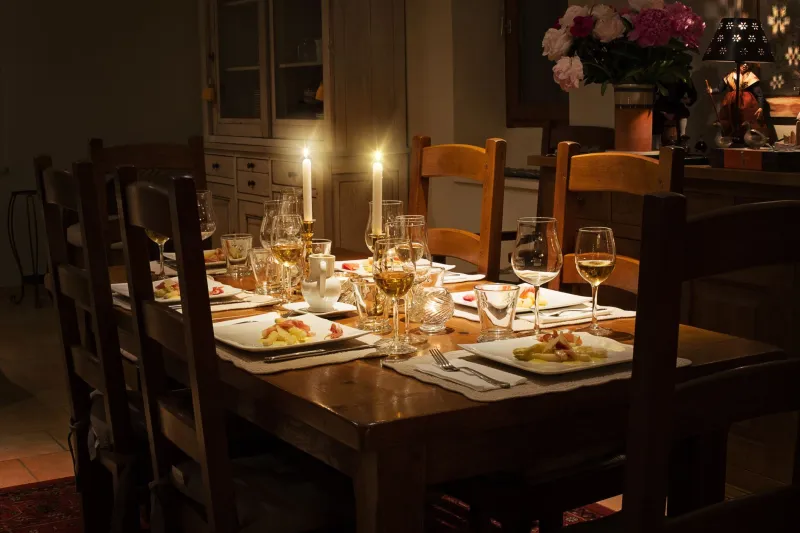
Counter seating does something that a four-top cannot. It removes the buffer. You are shoulder to shoulder with the person next to you, close enough to notice they ordered the sour cherry and not the apple, close enough to hear them tell the server it's their first time in town. Nobody has to engineer a conversation. Proximity does most of the work.
In Japan, the tea house counter has long been a place where the boundary between guest and host softens. You watch the person behind the counter work. You ask a question. You get a small story with your cup. American pie counters inherited a version of that rhythm without ever naming it: the server cutting a slice, the coffee going around, the pie server sliding back into its slot. It is theater, but it is also hospitality, and it is unusually honest.
A short case for the slice-and-steep pairing
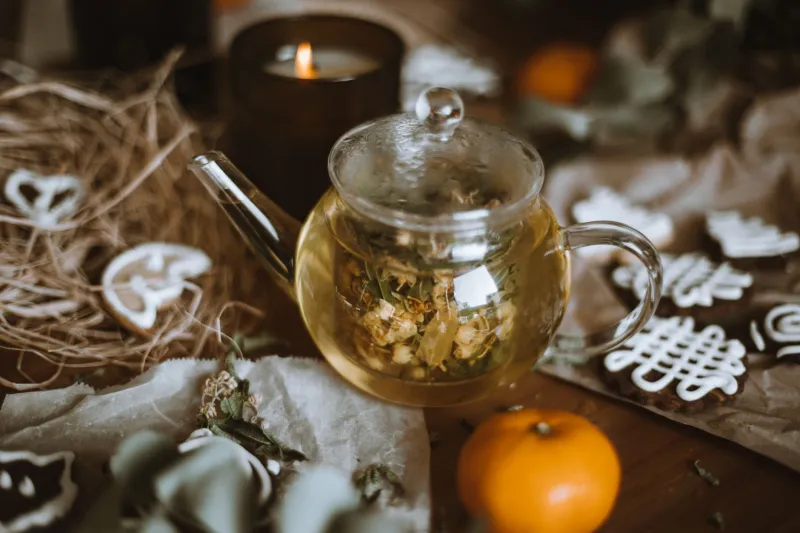
Coffee is the default at most counters, and rightly so. But tea deserves a seat here, especially if the goal is to linger rather than bolt. A pot of tea slows the whole transaction down. It gives you a reason to stay for a second slice of conversation, if not a second slice of pie.
The pairing logic is simple: match weight to weight, acid to brightness, sugar to tannin. A custardy buttermilk pie wants something brisk and malty to cut through it—an Assam or a strong breakfast blend. A key lime pie, all pucker and graham, is happiest beside something green and clean, like a sencha or a lightly steamed green tea. Sour cherry pie and a smoky oolong are a genuinely good argument. Chess pie, that Southern pantry miracle of butter and sugar, holds up to a spiced chai without flinching. And a shoofly pie, molasses-heavy and patient, pairs beautifully with a plain black tea that lets the dark sugar do the talking.
None of this requires ceremony. Order the pot, ask for two cups, and see who at the counter wants to taste it. That's the whole ritual.
Where the counter still lives
Pie counters are regional animals, and that's part of the charm. You find them in small-town diners where the pie case is older than most of the customers, in Midwestern supper clubs that still bring a relish tray first, in Southern meat-and-three spots where the pie list is longer than the entrée list. There are tea rooms in the Northeast that have been pouring from the same pots for decades, and roadside bakeries in the Pacific Northwest where a slice and a mug are basically the local handshake.
The common thread isn't the recipe. It's the arrangement: a short menu, a long counter, and a staff that has learned to read whether you want to talk or just sit. That read is the real hospitality. It's also the thing that's hardest to scale and easiest to lose.
Bringing the counter home
You cannot install a twelve-stool counter in a studio apartment, but you can borrow the spirit. A few practical moves:
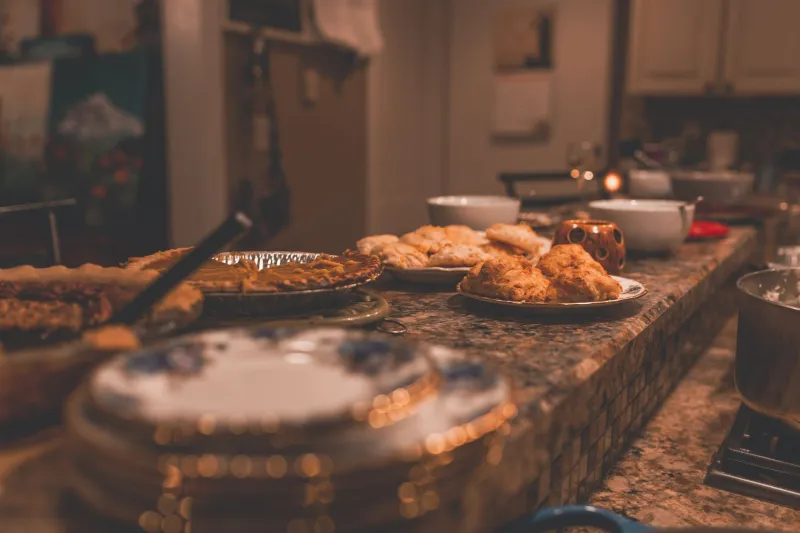
- Serve from one spot. Put the pie and the pot on a single surface—a kitchen island, a narrow sideboard, a folding table—and let people come to it rather than passing plates around. The counter is a destination, not a distribution system.
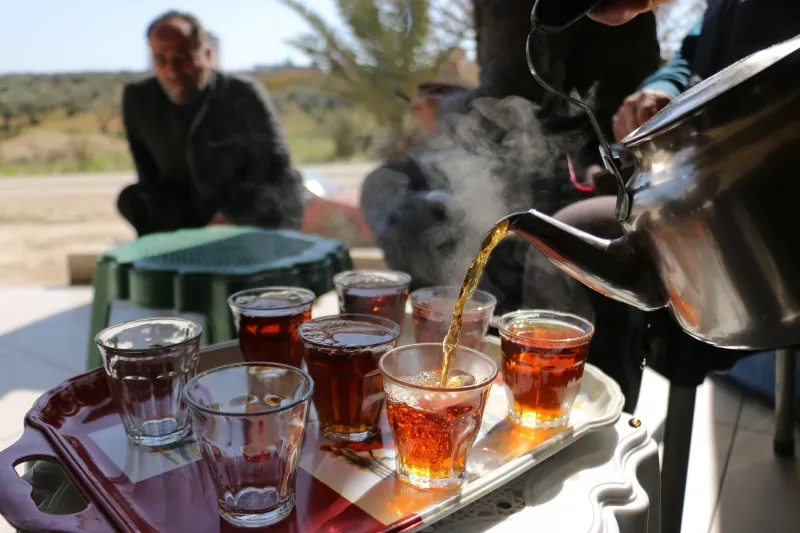
- Keep the pot going. One good teapot, refilled, does more for a gathering than three elaborate courses. It gives people a reason to get up, stretch, and talk to someone new on the way back.
- Offer two pies, not five. A choice of two is generous. A choice of five is a buffet. The counter aesthetic is about fewer things, done with confidence.
- Sit people next to someone they don't know. If you have a long table, use it like a counter: cluster the chairs, leave the ends open, and let the seating be a little bit unplanned.
- Let the slice be the ending. Dessert doesn't have to be a production. A piece of pie and a cup of tea is a complete sentence.
The underrated part
The pie counter is underrated because it doesn't ask for credit. It doesn't post. It doesn't need a concept. It just puts a stool in front of a pie case and trusts that people will find their way to it.
That trust is worth protecting, and worth copying. Some of the best shared tables in America are only twelve inches wide and covered in crumbs. Pull up a stool, order the slice, and ask for a second cup. The pot is already on.